
September 22, 2026
In this article
A startup may start with a few invoices, expenses, and bank transactions. As the business grows, those records can quickly become harder to manage. The right accounting software for startups can keep financial data organized without adding more manual work to the daily routine.
The best software does more than record income and expenses. It can pull in bank activity, categorize transactions, track invoices, reconcile accounts, and create useful financial reports. AI accounting software can take this further by handling routine tasks and flagging entries that need a closer look.
But startups do not need every feature available. They need the right features for their current needs, with enough room to grow. This guide covers the essential features to look for and what they mean for a new business.
What You Will Learn From This Blog
This guide will help you:
- Know which accounting tools a new firm needs first.
- See how bank feeds can cut down on data entry.
- Learn where AI can help with daily book work.
- Know why bank match and review tools matter.
- Pick tools that can grow with your firm.
- See what to check before you choose a plan.
What Should Accounting Software for Startups Do?
At its core, accounting software for startups should make it easy to keep clean and up-to-date books. You should be able to record sales, costs, bills, and bank data without a long set of steps.
The tool should also help you find errors. A missed sale, wrong cost code, or repeat entry can change your reports. Good software can flag such items so you can check them before they cause more work.
A startup also needs a clear way to view its cash and results. Reports should show what the firm earns, spends, owns, and owes. The data behind those reports should be easy to trace and check.
As the firm grows, the tool should keep pace. More sales, bank data, bills, users, and data should not force you to move to a new system too soon.
10 Essential Features of Accounting Software for Startups
1. Easy Setup and Simple Use
A new firm should not need days of work to start its books. Look for a clean setup flow, clear menus, and simple ways to add core firm data.
The chart of accounts should also be easy to set up and change. A sound chart helps keep like items in the same place. This makes reports clearer as the firm grows.
Ease of use matters even more when the owner handles books in-house. The less time spent on basic tasks, the more time there is for sales, work, and clients.
2. Bank Feeds and Auto Data Import
Bank feeds are a key part of modern accounting software for startups. They bring bank data into the books with less manual entry.
This can save time and help keep books up to date. It also gives you a view of new bank activity without keying each line by hand.
Still, imported data should not be seen as final. Each item needs the right account and review. A bank feed brings in the data, but good books depend on how that data is used.
3. Automatic Transaction Sorting
Every startup has many small bank entries. They may include rent, ads, tools, fees, travel, sales, and other costs. Sorting each one by hand can take a lot of time.
A good tool can learn from past choices and set rules for repeat items. This helps put each entry in the right account.
AI accounting software can take this step further. It can use past data and account rules to suggest how a new entry should be filed. The user can then check the choice and change it when needed.
4. Invoice and Income Tracking
Startups need a clear view of money due and money paid. The accounting tool should let you make and track bills sent to clients.
It should also link income data to the books. This cuts down on the risk of sales being left out of the records.
A good system should show the status of each invoice. You should be able to see what was sent, what was paid, and what is still due.
5. Cost and Receipt Tracking
Small costs can add up fast. A startup may have costs for tools, ads, rent, travel, office items, and fees.
The right tool should make it easy to record these costs and keep proof with the entry when needed. This gives you a better audit trail and makes later review easier.
It should also help you keep firm costs apart from non-business spending. Clear records help keep reports clean and make year-end work less of a task.
6. Bank Reconciliation
Bank reconciliation is a key part of clean books. It checks the bank record against the accounting record to make sure they agree.
The best accounting software for startups should make this task less manual. It can help match bank lines to entries already in the books and show items that do not match.
You still need to review the results. A match that looks right may not always be right. Regular review helps catch missing entries, repeat entries, and wrong amounts.
7. Clear Financial Reports
Reports turn raw data into useful facts about the firm. At a basic level, startups should have access to key reports such as the profit and loss report and balance sheet.
Cash data is also key. A firm can show a profit and still face cash issues if money is tied up in unpaid bills or other needs.
Reports should use clean, current data. It should also be easy to trace a number in a report back to the entry that made it.
8. AI and Smart Automation
AI is now part of many accounting tools. But the value of AI accounting software is not just that it uses AI. The real value is in how it cuts down repeat work while keeping review in the hands of the user.
AI can help sort bank entries, spot odd items, find repeat entries, and suggest bank matches. These tools can save time when used with good checks.
For new or large entries, human review still matters. AI should aid the work, not remove the need to understand what each entry means.
9. Business Tool Integrations
Startups often use many tools for sales, payments, online stores, and other tasks. Data may need to move between these systems and the books.
Good accounting software for startups should connect with the tools your firm already uses. This can reduce repeat data entry and help keep records in sync.
Check the list of supported tools before you sign up. An integration is useful only when it works with the tools that matter to your firm.
10. Accountant Access and Team Support
A startup may start with the owner doing the books. Later, a bookkeeper or CPA may take over some or all of the work.
Your accounting tool should make this shift easy. Look for user access, shared records, and reports that an outside bookkeeper can review with ease.
Clear records also help when you need advice on cash, costs, or firm growth. The goal is not only to store data. It is to make the data useful to the people who review it.
How to Choose Accounting Software for a Startup
Start with your real needs, not a long list of features. Think about how many bank accounts you have, how you bill clients, how many transactions you handle, and who will manage the books.
Then check the core work. Can the tool bring in bank data? Can it sort transactions? Can you match bank lines? Can you fix an entry with ease? Can you get the reports you need?
Next, look at growth. A tool that fits a small firm today may not fit it a year from now. Check user limits, data limits, plans, and key integrations.
Also look at the review process. A tool that does more work on its own is not always the right choice. You need to know what the system did and have a clear way to check it.
For many new firms, AI accounting software can be useful when it handles repeat work but still gives the user control over key choices.
CashBooks: AI Accounting Software Built for Startups
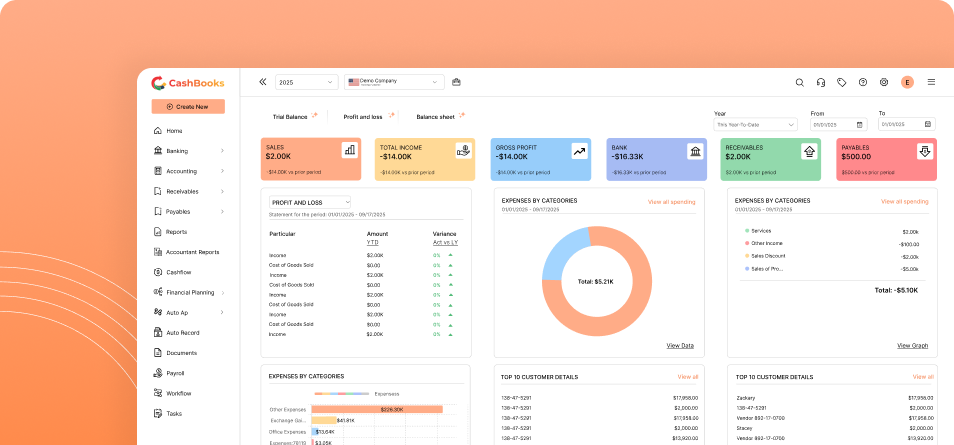
In our experience, startups need accounting software that keeps up with growth without creating more bookkeeping work. As sales, expenses, and bank activity increase, manual entry can quickly become a burden. A good system should handle routine work while keeping important records easy to review.
CashBooks is built around that need. Its startup-focused workflow includes:
- Bank Feeds and Auto Record: Bring bank activity into the books and reduce manual entry.
- Automated Transaction Categorization: Use past choices and business rules to sort routine income and expenses.
- Review Engine: Flag unusual, duplicate, or missing entries before they affect the books.
- Reconciliation: Use suggested matches to check bank activity against recorded transactions.
- Accountant Reports: Share clear financial reports with an outside bookkeeper or accounting firm.
- QuickBooks Import and Shopify Integration: Bring existing records into CashBooks and connect Shopify sales with your books.
Our approach to AI accounting software is simple: automate routine bookkeeping, but keep people involved when a transaction needs judgment or review. That gives startups a faster way to manage daily books without losing control of their financial records.
Our Expert Insight
One thing we have learned from working with startup books is that cleanup gets harder as the business grows. A few uncategorized transactions today can become hundreds of entries to sort through later. Setting a basic review routine early saves time and keeps financial reports more reliable.
We also find that automation works best for repeat transactions, not every transaction. New vendors, large payments, unusual charges, and unclear expenses still need a person to check the business purpose.
That is where AI accounting software adds real value. It can handle routine work in the background while bringing exceptions to your attention. For a startup, that balance helps keep the books accurate without making bookkeeping a daily burden.
Key Takeaways
- Choose accounting software for startups that is simple to set up and use.
- Bank feeds can reduce manual entry and keep books more current.
- Automatic sorting can save time on repeat bank entries.
- Reconciliation helps check bank data against the books.
- Clear reports help owners track income, costs, cash, and growth.
- AI accounting software can handle many repeat tasks and flag items that need review.
- Integrations can cut duplicate data entry.
- Accountant access makes it easier to get help as the firm grows.
- Clean data and regular review are still key, even with automation.
FAQs
1. Do startups really need accounting software?
Once a startup has regular sales, expenses, or multiple bank transactions, software can make recordkeeping much easier than spreadsheets or manual entries.
2. How much does accounting software for startups cost?
Pricing varies by provider and plan. Check the monthly fee, user limits, bank connections, and any extra charges for features you actually need.
3. Can a startup use accounting software instead of Excel?
Yes. Accounting software is better suited to ongoing bookkeeping because it can track transactions, reconcile accounts, and produce financial reports without relying on a growing spreadsheet.
4. What can AI accounting software do for a startup?
It can help with routine tasks such as transaction categorization, bank matching, and spotting unusual entries. Important or unclear transactions should still be reviewed.
5. Does a startup still need an accountant if it uses accounting software?
Software can handle much of the routine work, but an accountant can provide help with financial review, complex entries, tax matters, and decisions that require professional judgment.