September 17, 2026
In this article
- What You Will Learn From This Blog
- What Is Automated Reconciliation?
- How Does Automated Reconciliation Work?
- What Can Automated Reconciliation Software Reconcile?
- Key Features of Auto Reconciliation Software
- Benefits of Automated Reconciliation for Businesses
- CashBooks for Automated Bank Reconciliation
- Our Expert Insight
- Key Takeaways
- FAQs
Month-end reconciliation can be one of those bookkeeping tasks that takes far longer than it should. A business may have hundreds of bank transactions, card charges, deposits, and payments to check. Most entries may match without a problem, but finding the few that do not can mean going through records one by one. Automated reconciliation helps make this process faster by finding likely matches and bringing exceptions to the bookkeeper’s attention.
With the right system, routine matches can be handled with less manual work while unclear entries stay open for review. This can help reduce repeat checks, catch gaps sooner, and keep the books up to date without taking the human review out of the process.
In this blog, we’ll look at how automated reconciliation works, what it can reconcile, which features to look for in auto reconciliation software, and why businesses use it.
What You Will Learn From This Blog
This blog covers:
- What automated reconciliation means and how it works
- Which records can be matched with software
- Key tools found in auto reconciliation software
- Why firms use it and where human review still fits
- What to look for when you pick a tool
- How CashBooks can help with the bank to book flow
What Is Automated Reconciliation?
Automated reconciliation is a way to check two sets of money data and find items that agree or need review. A common case is a bank check. The bank feed has a list of cash moves. The books have the same cash moves set to an account. The task is to see if each item has a match.
With manual work, a bookkeeper may scan each line, check the date and amount, and mark the item by hand. That can take time when there are many lines.
With automated reconciliation, a tool can use data such as date, amount, payee, memo, and past match rules to find likely links. It can mark clear matches and send odd items to a review list.
The exact match logic can vary by tool. Some tools use fixed rules. Others can learn from past choices and use those choices to aid future work. In both cases, the bookkeeper should check the result before a final close.
How Does Automated Reconciliation Work?
The basic flow is much the same across many tools.
1. Bring in the Data
The tool gets bank, card, payment, invoice, or other data from a linked source. Good data is key. If a source is late or has gaps, the reconciliation work may also have gaps.
2. Read Each Item
The tool looks at key fields such as amount, date, name, memo, and type. It may also use rules set by the firm.
3. Find Likely Matches
The system checks one set of data against the other. A full match may be easy to spot. A split payment or a small date shift may need more care.
4. Flag Items That Do Not Match
Items with no clear match can be sent to a review list. This helps a bookkeeper focus on lines that need work instead of checking every line in the same way.
5. Review and Fix
A person checks the flagged items. They may link an item, add a missing entry, fix a wrong account, or leave the item open until more data is found.
6. Finish the Check
Once the items are checked, the books can be closed for that time span. A good record of the work can also help with later checks.
This flow shows why automated reconciliation is not just a one-click task. It is a mix of data checks, match rules, and human review.
What Can Automated Reconciliation Software Reconcile?
The range can vary by product and setup. Common uses include:
Bank Transactions and Book Entries
This is one of the main uses. Bank data can be checked against cash entries in the books.
Credit Card Activity
Card charges and payments can be checked against entries in the ledger. This can help find missed charges or items that were entered twice.
Invoices and Payments
A payment can be checked against an open invoice by amount, date, client, or other data. This can help keep open balances clean.
Bills and Payments
Payments to vendors can be checked against bills in the books. This can help spot bills that are still open or payments that lack a clear bill link.
Payment Data
Data from a payment tool can be checked against sales or cash entries. This is useful when a firm has many small payments to track.
The two data sets need enough shared data to make a sound match. If the source data is poor, even good software may need more manual work.
Key Features of Auto Reconciliation Software
Good auto reconciliation software should do more than mark items as done. It should help you see why a match was made and which items need care.
Automatic Transaction Matching
The system can look for matches based on amount, date, name, and other fields. Clear matches can move through the workflow with less manual input.
Match Rules
Rules can tell the system how to treat common types of entries. This is useful when the same type of bank or card item comes up often.
Exception Alerts
A strong tool should flag items that do not fit the set rules. These alerts can help bring odd items to the front of the review list.
Duplicate and Missing Entry Checks
The system can help find a line that may have been entered twice or a bank item that has no book entry. These checks can help keep the close clean.
Review Tools
Bookkeepers need a clear way to accept, reject, or change a match. The review step should be easy to follow and easy to trace.
Audit History
A record of what was matched, changed, or reviewed can help the team see what took place. It can also make later checks easier.
Reports
Reports can show what is matched, what is still open, and what needs review. This gives the team a clear view of the close.
Benefits of Automated Reconciliation for Businesses
The value of automated reconciliation comes from the work it cuts and the checks it adds.
Less Repeat Work
A bookkeeper does not need to check each clear match in the same way. The tool can handle routine checks and leave more time for items that need judgment.
Faster Close Work
When many bank or card lines are clear, auto reconciliation tools can speed up the close. This can help a team get clean reports sooner.
Fewer Manual Errors
Hand entry can lead to missed lines, wrong links, or duplicate work. Automated checks can reduce some of these errors, though they do not remove the need for review.
Better Focus on Odd Items
A review list helps the team focus on gaps, odd amounts, date shifts, and other items that need more care.
Clearer Records
A good process can show which items were matched and which were left open. That can make it easier to trace a balance later.
Better Use of Staff Time
For firms with high transaction counts, time spent on routine match work can add up. Automation can shift that time to review, client work, and other book tasks.
CashBooks for Automated Bank Reconciliation
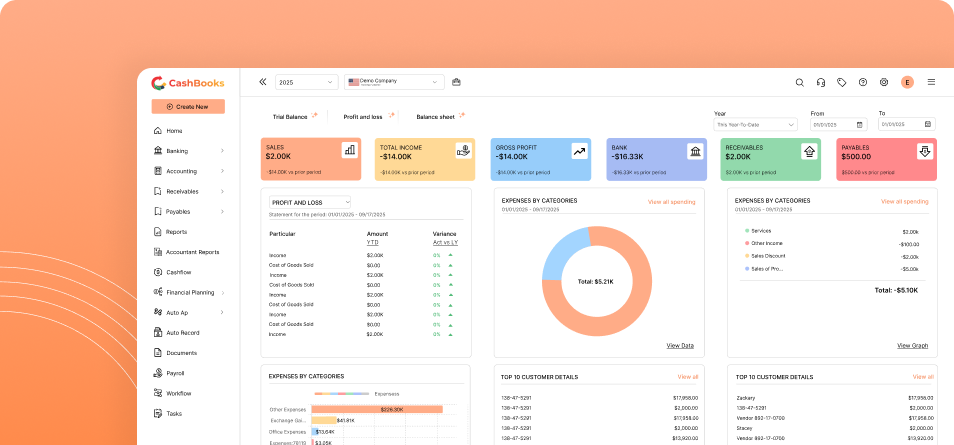
CashBooks is an AI-powered accounting platform that brings bank activity, transaction management, reconciliation, and review together in one place. For small businesses, bookkeepers, and accounting firms, this means reconciliation can sit within the regular bookkeeping workflow instead of being treated as a separate task.
What sets CashBooks apart is the way its tools work together. Bank Feeds bring in bank activity, while Auto Record and Automated Transaction Categorization help organize transactions before they reach the review stage. CashBooks can also surface unusual, duplicate, or missing entries and suggest likely reconciliation matches. The Review Engine then gives bookkeepers a clear point to check the work before finalizing records.
Everything Needed Around Reconciliation
Transaction Management
- Bank Feeds
- Auto Record
- Automated Transaction Categorization
- Complete Transaction Support
Reconciliation and Review
- Suggested reconciliation matches
- Unusual transaction detection
- Duplicate and missing entry checks
- Review Engine
Accounting and Reporting
- Invoice and bill tracking
- Accounting reports
- Accountant Reports for accounting firms
Data and Integrations
- QuickBooks Import
- Shopify Integration
- Powerful Integrations & Compliance
The result is more than automated matching. CashBooks connects the bank transaction, accounting record, reconciliation check, and final review in one system. That makes it a strong fit for teams looking for auto-reconciliation software while also needing a complete solution for their day-to-day accounting work.
Our Expert Insight
A high match rate does not always mean a reconciliation is accurate. A transaction can match by amount but still be tied to the wrong record or account.
Experienced bookkeepers pay close attention to timing differences, large transactions, split deposits, and old unreconciled items. These often explain why the books and bank statement do not agree.
It also helps to track repeat exceptions. If the same type of transaction needs correction each month, the issue may be with a rule or the way the transaction is recorded. Fixing that root cause can prevent the same problem from coming back.
Key Takeaways
- Automated reconciliation matches financial data with less manual work.
- It can check bank, card, invoice, bill, and payment records.
- Auto reconciliation software can flag gaps, duplicates, and unclear matches.
- Human review still matters for odd, high-value, or unclear items.
- Clean source data and clear rules can improve match results.
- CashBooks combines bank feeds, match help, review, and book tools in one flow.
FAQs
1. What can automated reconciliation software match?
It can match bank transactions with entries in accounting records, invoices, bills, payments, and other financial data. The exact match types depend on the software.
2. How accurate is automated bank reconciliation?
Accuracy depends on the quality of the bank data, accounting records, and matching rules. Suggested matches should still be reviewed when amounts, dates, or transaction details do not line up.
3. What happens when an automated reconciliation finds no match?
The transaction remains an exception for review. A bookkeeper can check for timing differences, missing entries, duplicates, or transactions that were recorded under a different account.
4. Can I use automated reconciliation with bank feeds?
Yes. Bank feeds can bring current bank activity into accounting software, where transactions can then be categorized and matched against existing records.
5. When should a small business automate bank reconciliation?
Automation is most useful when the business has regular bank activity and enough transactions to make manual matching time-consuming. It can be especially helpful during recurring month-end reconciliation.