
September 17, 2026
In this article
- What You Will Learn From This Blog
- What Is Bank Reconciliation?
- Why Bank Reconciliation Takes So Much Time
- How to Reconcile a Bank Account Manually
- What Is an Automated Reconciliation Tool?
- How an Automated Reconciliation Tool Simplifies Bank Reconciliation
- CashBooks: AI Bookkeeping Software for Easier Reconciliation
- Our Expert Insight
- Key Takeaways
- FAQs
You finish the month, check the bank balance, and find that it does not match your books. Now you have to track down the difference. A missed bank fee, duplicate entry, or payment that cleared late can be enough to throw things off. An automated reconciliation tool can help find these gaps without making you check every transaction by hand.
Bank reconciliation is not hard because the steps are complex. It takes time because there can be hundreds of transactions to compare. The right software can handle routine matches, flag items that need review, and help you focus on the transactions that actually need attention.
In this blog, we’ll look at how automated reconciliation works, how it differs from a manual process, and what to look for when choosing a tool for your business.
What You Will Learn From This Blog
This guide covers:
- What bank reconciliation means and why it matters
- Why manual reconciliation can take so much time
- How to reconcile a bank account by hand
- What an automated reconciliation tool does
- How automation can simplify the bank match process
- How AI bookkeeping software can support the work
- What to look for in a tool
- How CashBooks handles automated reconciliation
What Is Bank Reconciliation?
Bank reconciliation is the process of checking your bank statement against the cash records in your books. The goal is to make sure the two sets of records agree after you account for valid timing gaps and other items.
For example, your bank may show a $2,000 payment that has not yet been entered in your books. You may also have a check in your books that has not cleared the bank yet. These do not always mean there is an error.
A good reconciliation helps you sort out the cause of each gap. It can show that a payment is still pending, a bank fee was missed, or a transaction was entered twice.
This check is useful for more than month-end work. Clean bank records give you a better base for reports, cash review, and other book tasks.
Why Bank Reconciliation Takes So Much Time
The main issue is not always the amount of work. It is the need to check each item with care.
A business may have hundreds of bank entries in one month. These can include:
- Customer payments
- Vendor bills
- Bank fees
- Card charges
- Transfers
- Refunds
- Interest
- Cash deposits
- Loan payments
When this work is done by hand, each bank entry must be compared with the related book entry. Even when most items match, the few that do not can take time to find.
Timing can add more work. A payment may be entered today but reach the bank later. A deposit may show in the bank before it is added to the books. You may also need to check the amount, date, account, and payee for each match.
Errors create another task. A missing entry, duplicate charge, or wrong amount can make the final balance look wrong. The bookkeeper then has to trace the issue before the account can be marked as reconciled.
How to Reconcile a Bank Account Manually
Manual reconciliation follows a clear set of steps.
1. Get the Bank Statement
Start with the bank statement for the period you want to check. Note the opening balance, closing balance, and all listed activity.
2. Compare Bank and Book Records
Check each bank entry against your accounting records. Look at the date, amount, payee, and type of transaction.
3. Mark Matching Entries
Mark entries that appear in both records. This helps narrow the review to items that still need attention.
4. Find the Differences
Review entries that appear on only one side. These may be pending checks, recent deposits, bank fees, missing entries, or data errors.
5. Make Needed Corrections
Add missing entries or fix wrong amounts and account choices. Do not change a record just to make the numbers match.
6. Confirm the Final Balance
Once the differences have been checked, confirm that the adjusted book balance agrees with the bank balance.
The process is simple in theory. It can still take a lot of time when the account has a high number of entries.
What Is an Automated Reconciliation Tool?
An automated reconciliation tool uses software to compare bank activity with transactions in your books. It can find likely matches based on details such as the amount, date, and transaction data.
Instead of checking every line from scratch, you can review the matches the system finds and focus on items that need more care.
A useful tool does not mean that every match should be accepted without review. Good reconciliation still depends on checking exceptions and making sure the records tell the right story.
Automation works best when it reduces repeat work while keeping the review step clear.
How an Automated Reconciliation Tool Simplifies Bank Reconciliation
Matches Bank Transactions With Book Entries
The first major gain is faster matching. An automated reconciliation tool can compare bank transactions with entries in your books and suggest likely matches.
For clear matches, this can cut down on the need to search through records one by one. The bookkeeper can spend more time on entries that need judgment.
Finds Unmatched Transactions
Not every bank entry will have a clear match. A good tool can show which items remain unmatched.
This gives you a focused list to review. You do not need to scan the full bank statement again just to find the few entries that need work.
Helps Spot Duplicate Entries
Duplicate entries can make your books show more cash activity than the bank does. They can also affect expense totals and other reports.
An automated system can help flag entries that look like duplicates. The bookkeeper can then check the source and decide what action is needed.
Flags Missing Entries
A bank charge may not have been added to the books. The same can happen with a payment, refund, or transfer.
By comparing the two sets of records, an automated reconciliation tool can help point out activity that does not have a matching book entry.
Handles Repeat Matches
Many businesses have repeat activity. A monthly bank fee, regular vendor payment, or common customer payment may follow the same pattern.
Software can use past records and transaction details to make better match suggestions. This can reduce the amount of repeat work during each reconciliation.
Keeps Exceptions Easy to Review
Automation should not hide the entries that do not match. It should make them easier to see.
A good workflow puts unmatched and unusual items in front of the person doing the books. This helps the team focus on the areas where human review adds the most value.
Creates a More Consistent Process
Manual work can vary from one person to the next. A software-based process can give the team a set way to review bank activity.
This is useful when more than one person works on the books or when an outside bookkeeper handles the account.
CashBooks: AI Bookkeeping Software for Easier Reconciliation
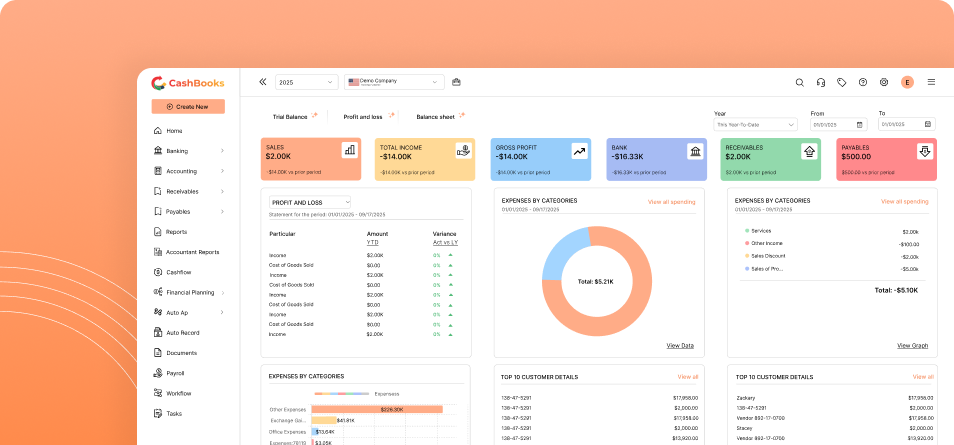
Bank reconciliation works best when the data going into the process is complete, organized, and easy to check. CashBooks, an AI bookkeeping software, helps businesses move from bank activity to matched transactions and final review in one workflow.
1. Pull In Current Bank Activity
CashBooks Bank Feeds brings bank transactions into the books, reducing the need for manual entry. This gives the reconciliation process a current set of bank records to compare against the books.
2. Record Transactions Before Reconciliation
With Auto Record, transactions can be added to the books as part of the regular bookkeeping process. This helps reduce gaps that may otherwise show up when it is time to reconcile an account.
3. Find and Review Matches
CashBooks can suggest matches between bank transactions and recorded entries. Instead of checking every transaction from scratch, you can focus on the matches that need confirmation and the entries that remain unmatched.
4. Catch Items That Need Attention
The Review Engine helps identify issues such as duplicate entries, missing transactions, and unusual activity. These checks are useful when a bank balance does not agree with the books, and you need to find the reason.
5. Keep the Books Ready for Final Review
Once reconciliation is complete, Accountant Reports can help provide a clear view of the financial records. This gives business owners and accountants a useful record to review after the bank activity has been checked.
The value is in how these steps work together. CashBooks does not treat reconciliation as a separate task at the end of the month. It connects the bank feed, transaction records, matching, and review process so there is less manual work between receiving a bank transaction and confirming that it belongs in the books.
Our Expert Insight
A bank account can reconcile perfectly, and the books can still be wrong. A duplicate transaction, misclassified payment, or old unreconciled item may not change the ending balance but can still affect the financial records.
That’s why we don’t view reconciliation as simply making the numbers match. An automated reconciliation tool should make exceptions easy to find, show what was matched, and flag items that need review. Automation should cut down on routine work without taking away the accountant’s review and judgment.
Key Takeaways
- Bank reconciliation checks bank records against your books.
- Manual reconciliation can take time when transaction volume is high.
- An automated reconciliation tool can find likely matches and highlight items that need review.
- Automation can help spot missing, duplicate, and unusual transactions.
- AI bookkeeping software can add pattern-based suggestions to the reconciliation process.
- Good bank feeds are important for a reliable workflow.
- Human review still matters when a transaction does not clearly match.
- The right tool should make reconciliation easier to review, not just faster to complete.
FAQs
1. What should I look for in an automated reconciliation tool?
Look for reliable bank feeds, match suggestions, duplicate detection, exception alerts, and a clear review trail. The tool should make it easy to see why a transaction was matched.
2. Can automated reconciliation handle credit cards and multiple bank accounts?
Yes. Many tools can reconcile multiple bank and credit card accounts, but the available account types and bank connections vary by software.
3. What happens to transactions that an automated tool cannot match?
Unmatched transactions are usually left for manual review. They may need a new match, a correction in the books, or further investigation.
4. Is automated bank reconciliation suitable for small businesses?
Yes. It can be useful for small businesses because it reduces repetitive matching work and helps keep account records current without requiring every transaction to be checked manually.
5. Can automated reconciliation replace an accountant?
No. Automation can handle routine matching, but an accountant may still be needed to review exceptions, correct errors, and make accounting decisions that require judgment.