September 18, 2026
In this article
- What You Will Learn From This Blog
- What Is an Invoice Template for Small Business?
- What Should an Invoice Template for Small Business Include?
- How to Create an Invoice Template for Small Business
- How to Use an Invoice Template to Send Professional Invoices
- Common Invoice Mistakes Small Businesses Should Avoid
- A Smarter Way to Manage Small Business Invoices
- Our Expert Insight
- Key Takeaways
- FAQs
Sending an invoice is a basic part of running a small business, but a poor invoice can lead to slow payment, missed details, and extra work. A clear invoice tells a client what they owe, why they owe it, and when payment is due. That makes an invoice template for small business more than a simple page with prices. It is part of your daily cash and record process.
A good invoice should be easy to make, easy to read, and easy to track after it is sent. As invoice volume grows, manual work can also become harder to manage. This is where a clear process and, when needed, invoice automation can help.
What You Will Learn From This Blog
This blog explains how to create and use an invoice template for small business needs. You will learn:
- What a small business invoice should contain
- How to build a clear invoice template
- How to send and track invoices
- Common invoice errors to avoid
- When manual invoicing may no longer be enough
- How invoice automation software can reduce routine work
What Is an Invoice Template for Small Business?
An invoice template for small business is a ready made format that contains the main fields needed to bill a customer. Instead of making each invoice from scratch, you can use the same layout for each sale or service.
A basic template may include your business name, customer details, invoice number, date, items sold or work done, amount due, tax, payment terms, and payment details.
The key benefit is consistency. Each invoice follows the same basic format, so customers know where to find key details. You also spend less time setting up each new bill.
A template works well when your billing needs are simple. A small firm with a few clients may only need to update the client name, service, amount, and due date.
Still, a template does not manage the full billing process. You must still check the data, send the invoice, record payments, and follow up on unpaid bills. Once those tasks take up more time, it may be worth looking at a more complete system.
What Should an Invoice Template for Small Business Include?
A useful invoice template for small business should have enough detail to make the bill clear without adding fields that do not serve a purpose.
1. Business Details
Add your business name, address, phone number, and email. If your business uses a tax ID or other required tax details, add those as well.
2. Customer Details
Include the customer or client name and the right billing contact. For business clients, use the legal or billing name they gave you.
3. Invoice Number and Date
Give every invoice a unique number. Use a simple number pattern that is easy to follow. Also include the date the invoice was issued.
4. Products or Services
List what the customer is paying for. Use clear names and add the quantity, rate, or hours when they help explain the charge.
For example, instead of writing "Consulting," you could write "Website planning session, 2 hours." This gives the customer a clear view of the charge.
5. Amount, Tax, and Total
Show the price for each item and the total amount due. If tax applies, show the tax as a separate line. If you give a discount, show that too.
6. Payment Terms
State when payment is due. Terms such as "Due in 30 days" are clear, but the actual due date is even easier to track.
7. Payment Details
Tell the customer how to pay. You may include bank details, a payment link, card payment details, or another approved method.
8. Notes or Terms
Use this area for useful details such as late payment terms, project notes, or a short thank you. Keep it brief and relevant.
How to Create an Invoice Template for Small Business
Creating an invoice template for small business use does not need to be hard. The main goal is to make a format that is clear and easy to update.
Step 1: Pick a Simple Format
Use a format that you can edit and save with ease. Avoid a design that gives more space to logos and graphics than to billing details.
Step 2: Add Your Business and Client Fields
Set up the fields that stay the same on most invoices. This may include your business name, contact details, payment methods, and standard terms.
Leave clear areas for customer details and the work or goods being billed.
Step 3: Set an Invoice Number System
Choose a numbering method before you send your first invoice. You could use 1001, 1002, 1003, and so on. The key is to keep the sequence clear and avoid duplicate numbers.
Step 4: Add Your Line Item Area
Make room for the item name, quantity, rate, and amount. If you bill by the hour, add a field for hours and hourly rate.
Step 5: Add Totals and Payment Terms
Make the amount due easy to spot. Put the due date near the total so the customer does not need to search for it.
Step 6: Save a Master Copy
Keep one clean version of your invoice template for small business use. Make copies from that file rather than changing the master each time.
Step 7: Test It
Send a test invoice to yourself. Check the layout, math, dates, file name, payment details, and any links before using it with a client.
How to Use an Invoice Template to Send Professional Invoices
A good template only helps when the process around it is also sound.
Start by checking the customer name and billing details. Then confirm that each line item matches the work or goods provided. Check the math, tax, total, and due date before sending the invoice.
Use a clear file name if you send invoices as PDFs. A format such as Invoice-1042-ABC-Company makes it easier to find the record later.
Send the invoice as soon as the work or sale is ready to bill. Waiting can push back payment and make your cash records less current.
After sending it, mark the invoice as sent and keep a record of the due date. If payment does not arrive on time, follow your normal follow up process.
For repeat clients, keep the same layout and terms unless the agreement changes. Consistency can make your billing process easier for both sides.
Common Invoice Mistakes Small Businesses Should Avoid
Even a well made invoice template for small business use can lead to problems if the data is wrong.
Missing Customer Details
An invoice with the wrong legal name or billing contact may be delayed. Check the details before sending.
Duplicate Invoice Numbers
Two invoices with the same number can make payment and record checks harder. Use a clear sequence.
Wrong Totals
A small math error can create confusion. Check line totals, tax, discounts, and the final amount.
Unclear Due Dates
"Pay within 30 days" is less direct than showing the exact date payment is due. Use both when useful.
Vague Descriptions
A line that only says "Services" gives the customer little detail. Describe the work in plain terms.
Not Tracking Payment Status
Sending an invoice is not the end of the process. You also need to know which invoices are open, paid, overdue, or still being reviewed.
Using Old Client Data
Old addresses, rates, tax details, or payment terms can cause avoidable issues. Check saved data when client details change.
A Smarter Way to Manage Small Business Invoices
A basic invoice template for small business needs works well when you only have a few invoices to manage. But once billing becomes a regular task, creating invoices is only one part of the work. You also need to track payments, record transactions, keep bank activity matched, and make sure your books stay current.
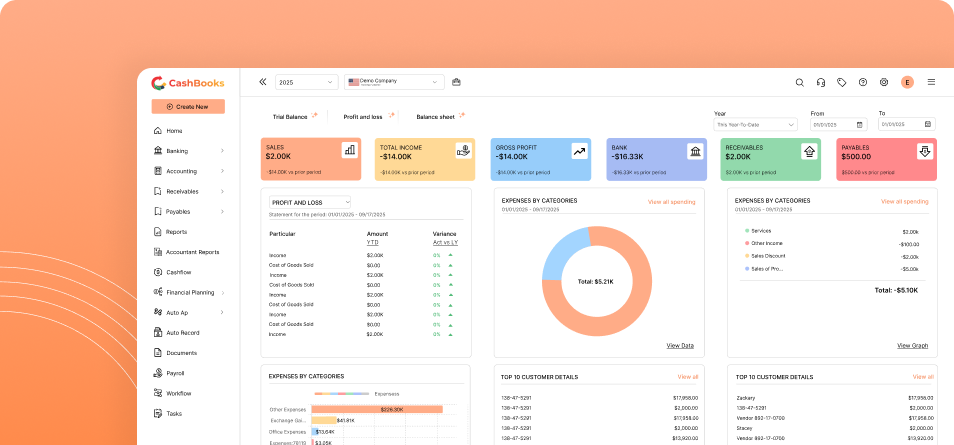
CashBooks is invoice automation software built to handle this work in one accounting workflow. It helps businesses create and manage invoices while keeping the related financial activity connected to their books.
Here is how the workflow comes together:
- Create and Manage Invoices: Handle invoice work without relying on separate files for each customer or billing cycle.
- Bank Feeds: Bring bank transactions into CashBooks so customer payments and other activity can be recorded in the books.
- Auto Record: Reduce manual entry by recording financial activity as part of the bookkeeping workflow.
- Automated Transaction Categorization: Use business activity, past choices, and account rules to suggest the right categories for transactions.
- Review Engine: Flag unusual, duplicate, or missing entries for a closer review before the records are finalized.
- Reconciliation Support: Suggested matches help connect bank activity with transactions already recorded in the books.
- Accountant Reports: Give outside bookkeepers and accounting firms clear reports for review and ongoing accounting work.
The benefit goes beyond sending invoices faster. When a customer pays, that payment becomes part of the business's financial records. CashBooks helps connect that activity with the rest of the bookkeeping process, so you do not have to treat invoicing, bank records, transaction review, and reporting as separate jobs.
Human review still matters. CashBooks can handle routine work and make suggestions, while the business owner or bookkeeper remains in control of what gets approved or changed.
For a small business moving beyond a basic invoice template for small business, this gives invoicing a more useful role: it becomes part of a connected process that helps keep the books ready for review.
Our Expert Insight
An invoice should make sense beyond the day it is sent. The invoice number, customer name, amount, and payment date should make it easy to trace the sale when you review your books later.
A common mistake is building an invoice process around what is easy to create, rather than what is easy to manage. Set clear rules for invoice numbers, payment terms, and overdue follow ups before your billing volume grows.
When those tasks become repetitive, invoice automation software can handle routine work while keeping unusual items open for review. That gives small businesses more control without adding unnecessary manual work.
Key Takeaways
- A clear invoice template for small business use creates a consistent billing process.
- Include business details, customer data, invoice numbers, dates, line items, totals, payment terms, and payment details.
- Give every invoice a unique number and a clear due date.
- Check the customer data, math, tax, and payment details before sending.
- Keep track of invoices after they are sent, not just when they are created.
- Templates work well for simple billing needs, while growing firms may need more automation.
- Invoice automation software can connect billing tasks with payment tracking and bookkeeping.
- Keep human review in the process, even when routine work is automated.
FAQs
1. What is the best invoice format for a small business?
PDF is a common choice because it keeps the invoice layout fixed when you send it to a customer. Keep an editable master copy so you can update future invoices.
2. Can I create my own invoice template for a small business?
Yes. You can create one in Word, Excel, Google Docs, or accounting software. The format matters less than having accurate billing details, clear payment terms, and a consistent invoice number system.
3. How long should a small business keep invoices?
Keep invoices and related records for the period required by your federal, state, and local tax rules. The exact period can vary based on the record and your business situation.
4. Can invoice automation software send recurring invoices?
Yes. Many invoice automation software tools can create and send recurring invoices based on a set schedule. This is useful for subscriptions, retainers, and other repeat services.
5. What is the difference between an invoice and a bill?
An invoice is a request for payment sent by the seller to the customer. A bill is the same transaction viewed from the buyer's side. The terms are often used interchangeably in everyday business use.