
September 17, 2026
In this article
- What You Will Learn From This Blog
- What Is Manual Reconciliation?
- How to Perform Manual Reconciliation Step by Step
- Common Challenges With Manual Reconciliation
- What Is Automated Reconciliation?
- Manual Reconciliation vs Automated Reconciliation
- CashBooks: A Practical Shift From Manual to Automated Reconciliation
- Our Expert Insight
- Key Takeaways
- FAQs
A bank statement may look easy to check until you have hundreds of transactions to match. A payment may be missing, a fee may be entered twice, or a transfer may be in the wrong account. Manual reconciliation means finding these issues by checking transactions one by one, which can take hours as your business grows.
For a small number of transactions, that may not be a problem. But as sales, expenses, card charges, and bank activity increase, the same checks can become a regular time drain. Auto reconciliation software can help by matching clear transactions and flagging items that need a closer look.
The goal is not to remove human review. It is to spend less time on routine matches and more time on transactions that need judgment. This blog explains how both methods work, where each fits, and what businesses should consider before changing their process.
What You Will Learn From This Blog
This blog will help you understand:
- What manual reconciliation means
- How to do a manual bank check
- The main pain points of manual work
- How auto match tools work
- Key gaps between manual and auto work
- When a firm may need an auto tool
- What to look for in auto reconciliation software
- Why human review still has a role
What Is Manual Reconciliation?
Manual reconciliation is the act of checking your bank data against your books by hand. You look at the bank line, find the same item in your books, and check that the date, payee, and amount fit.
For some firms, this may be a daily task. For others, it may be done each week or at month-end. The goal stays the same: find and fix gaps before they hurt the books.
A basic check may include:
- Bank deposits
- Card buys
- Checks
- Bank fees
- Loan payments
- Bill pay
- Owner draws
- Other bank moves
Say your bank shows a $650 card sale. Your books should have a $650 sale tied to the right date and account. If that line is not there, you need to find out why.
Manual reconciliation gives the bookkeeper a close view of each line. That can help when a bank has odd data or when a firm has few bank lines. It also gives the user a chance to check the reason for each match.
The issue is time. A bank with 40 lines is not hard to check by hand. A bank with 2,000 lines is a very different task.
How to Perform Manual Reconciliation Step by Step
A clear manual reconciliation process can help cut down on missed items. The exact steps may vary by firm, but the core work is much the same.
1. Get the Bank Record
Start with the bank statement or bank data for the time you need to check. Make sure the date range is right. Keep the start and end balances close at hand.
2. Check the Book Balance
Open your book file and check the same date range. Note the book balance and any items that may have been held back or not yet cleared.
3. Match Each Bank Line
Go through the bank lines one by one. Look for the same amount and payee in the books. Check the date as well. Do not mark a line as a match just because the amount is the same.
4. Mark Items That Match
Once a line is clear, mark it as checked. This makes it easy to see what is done and what still needs work.
5. Find Unmatched Items
Some bank lines may have no match. Look for missing sales, bills, fees, transfers, or card buys. A line may also be in the books but have the wrong amount.
6. Fix the Book Record
Add missing entries or fix wrong data as needed. Keep a clear note for items that need more proof or review.
7. Check the Final Balance
When all lines are checked, compare the final book balance with the bank balance. If there is still a gap, keep looking until you know why it is there.
This process works well when the number of lines is low. It can become hard to keep up when the same work must be done for many accounts each month.
Common Challenges With Manual Reconciliation
The main issue with manual reconciliation is not that the work is hard to learn. It is that the same checks must be done again and again.
It Takes More Time
Each bank line needs a look. As the number of lines grows, so does the time spent on the task. This can take bookkeepers away from work that needs more skill.
Small Errors Can Be Missed
A $50 fee may look much like another $50 line. A wrong date or account can also pass a quick check. The more lines a person checks, the harder it can be to stay sharp.
Duplicate Entries Can Cause Gaps
A sale or payment may get added twice. If the bank has one line and the books have two, the balance will not match.
Missing Items Take Time to Find
A bank fee, card buy, or transfer may be in the bank data but not in the books. Finding these items by hand can take many checks.
Month-End Can Pile Up
If manual reconciliation is put off, the work can pile up. A full month of bank lines may then need to be checked at once.
These issues do not mean manual work is wrong. It means the work may not scale well as the books grow.
What Is Automated Reconciliation?
Automated reconciliation uses software to help match bank data with entries in the books. Instead of asking a person to check every clear match, the tool can use set rules and past data to find likely matches.
A basic flow looks like this:
Bank data → Match check → Match found or item flagged → User review → Reconciled books
The tool may look at the amount, date, payee, account, and past match data. Clear items can be marked as likely matches. Items that do not fit can be sent for review.
This is where auto reconciliation software can cut repeat work. The user still checks the items that need care, but does not have to spend the same amount of time on each clear line.
For example, a bank may have 500 lines for a month. If 420 have a clear match, the tool can help sort those from the 80 that need a closer look. The bookkeeper can then spend more time on the lines that may have an issue.
Good automation is not about letting a tool make every choice. It is about moving simple checks to the tool and keeping human review where it adds value.
Manual Reconciliation vs Automated Reconciliation
The main gap between the two methods is how the work gets done.
| Factor | Manual Reconciliation | Automated Reconciliation |
|---|---|---|
| Transaction checks | Done by hand | Software helps find matches |
| Match work | User checks each line | Clear matches can be grouped |
| Error checks | Based on user review | Rules can flag odd items |
| Repeat work | High | Lower for clear items |
| Large data sets | Can take more time | Easier to process |
| Human review | Needed for most lines | Focused on items that need review |
| Setup | Simple for small books | Needs software and setup |
| Control | Direct user control | User reviews software results |
The choice is not always one or the other. Many firms use both. A tool may handle clear matches while a bookkeeper checks odd, new, or high-value items.
For a small firm with few bank lines, manual reconciliation may still be a good fit. It can also work well when each line needs a close look.
For a firm with many accounts or a high number of bank lines, auto reconciliation software may help cut the amount of repeat work. The key is not just speed. The tool should make it easier to spot items that need a human check.
CashBooks: A Practical Shift From Manual to Automated Reconciliation
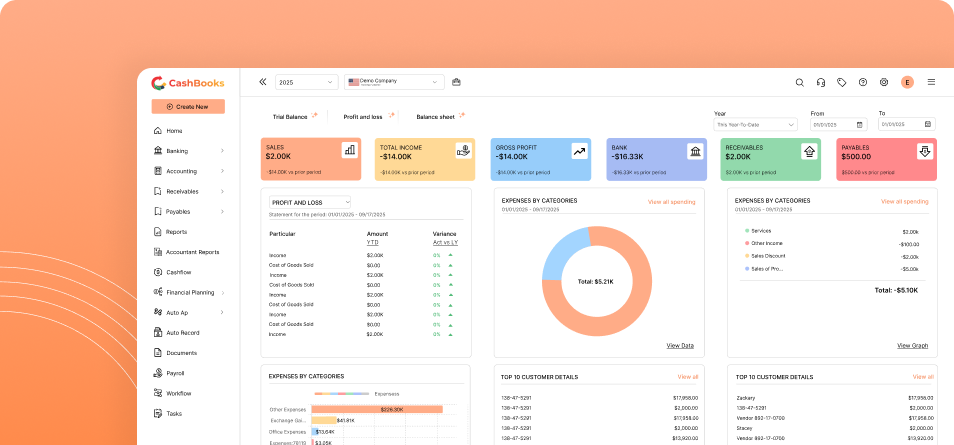
The challenge with manual reconciliation is not matching one transaction. It is keeping the same level of accuracy when hundreds of transactions need to be checked every month. CashBooks takes a different approach by handling routine work in the background while keeping review and approval in the hands of the bookkeeper.
Its reconciliation workflow brings several parts of bookkeeping together:
- Bank Feeds: Connect bank accounts and bring transactions into the books without entering each one by hand.
- AI Transaction Categorization: Uses account history, business activity, and past choices to suggest the right category for each transaction.
- Auto Record: Records bank activity in the books and cuts down on repetitive entry work.
- Review Engine: Checks transactions and flags unusual, duplicate, or missing entries that may need a closer look.
- Suggested Reconciliation Matches: Finds likely matches between bank transactions and book entries for the user to review.
- Complete Transaction Support: Handles income, expenses, transfers, fees, and other common bank activity in the same workflow.
- Accountant Reports: Provides clear reports that accountants and business owners can use to review financial records.
The value of this setup is not simply faster matching. A transaction can have the right amount and still be recorded to the wrong account or lack the context needed for a proper review. CashBooks uses automation for routine checks while leaving exceptions for human review. For businesses moving from manual reconciliation to auto reconciliation software, this creates a more practical way to manage higher transaction volume without giving up control over the books.
Our Expert Insight
A reconciliation is not accurate just because the ending balance matches. A transaction can still be posted to the wrong account, entered twice, or left out. Good reconciliation checks the records behind the final balance.
When reviewing auto reconciliation software, businesses should look at how it handles exceptions. Can users see why a match was suggested? Can they reject a match? Does the system flag duplicate, unusual, or missing transactions? These checks matter because not every match is a good match.
The goal should be simple: let software handle clear, routine matches while giving bookkeepers more time to review transactions that need judgment. That is a better measure of automation than the number of transactions a tool can match.
Key Takeaways
- Manual reconciliation means checking bank data against book entries by hand.
- It can work well for firms with a small number of bank lines.
- Large data sets can make manual checks slow and hard to manage.
- Automated tools can help find clear matches and flag items that need review.
- Auto reconciliation software can reduce repeat match work without removing human checks.
- A good process still needs a person to review odd or unclear entries.
- The right choice depends on bank volume, book needs, and the level of review each line needs.
FAQs
1. How often should a business reconcile its bank account?
Most businesses should reconcile their accounts monthly. Businesses with high transaction volume may need to reconcile more often.
2. What causes a bank reconciliation to be off?
Missing entries, duplicate transactions, bank fees, wrong amounts, and timing differences are common causes of reconciliation errors.
3. Is automated reconciliation accurate?
It can improve consistency by matching transactions based on available data and rules. Unusual matches should still be reviewed.
4. When should a business switch from manual reconciliation?
Consider automation when reconciliation takes too much time, transaction volume grows, or your team spends hours on routine matching.
5. What should I look for in auto reconciliation software?
Look for bank feeds, transaction matching, error checks, exception alerts, review controls, and clear reconciliation records.