September 22, 2026
In this article
- What You Will Learn From This Blog
- What Is AI in Accounting?
- How AI Is Used in Accounting Today
- Key Benefits of AI in Accounting
- What Is AI Accounting Software and How Does It Work?
- AI in Accounting vs. Traditional Accounting Processes
- How Businesses Can Adopt AI in Accounting
- CashBooks as AI Accounting Software for Modern Bookkeeping
- Our Expert Insight
- Key Takeaways
- FAQs
What if your accounting software could catch an unusual transaction before it became a problem? That is one of the practical changes brought by AI in accounting. Instead of relying on people to handle every entry by hand, businesses can now use AI to sort transactions, spot duplicates, suggest matches, and flag activity that needs a closer look.
This does not mean accountants are being pushed out of the process. AI accounting software takes care of more routine work, while accountants and business owners stay in control of review and decision-making. As these tools become part of everyday accounting, they are changing how financial records are managed, checked, and kept up to date.
What You Will Learn From This Blog
This guide explains:
- What AI in accounting means and how it works
- How AI is used in daily accounting tasks
- The main benefits and limits of AI tools
- How AI accounting software handles common work
- How AI differs from older manual processes
- Steps businesses can take to adopt AI
- What to look for in an AI-based accounting system
What Is AI in Accounting?
AI in accounting means using smart computer systems to handle tasks that need data review, pattern checks, and set rules. These systems can study past records and use that data to help sort, match, flag, or record new items.
For example, a system may review a bank charge and use past choices to suggest the right account. If a payment looks much higher than past payments, it may flag the item for review.
The goal is not to let AI make every accounting choice on its own. Good accounting still needs human review. AI works best when it handles repeat tasks while people check items that are new, large, unclear, or unusual.
This is one reason AI in accounting is useful for small firms. A small team can handle more work without adding the same amount of manual data entry.
How AI Is Used in Accounting Today
AI is already used across several parts of the accounting process. The exact tools vary by platform, but common uses include:
Transaction Categorization
AI can review transaction details and past records to suggest income or expense accounts. Over time, the system can learn how a business tends to record common items.
This can reduce the need to sort each bank item by hand. Users can still check and change the suggested account when needed.
Bank Feed Review
AI tools can work with bank feeds to bring new activity into the books. They can help spot likely matches, repeat charges, and items that need a closer look.
This gives users a faster way to review current bank activity without keying in each item.
Reconciliation
AI can compare bank activity with entries in the books and suggest likely matches. This can make reconciliation faster, while the user remains in charge of the final check.
Error and Duplicate Checks
AI can look for patterns that may point to duplicate entries, missing records, or unusual activity. These checks can help catch issues before they affect reports.
Invoice and Payment Work
Some systems can read invoice data, record key details, and link transactions to the right records. This reduces manual entry and helps keep sales and payment data in one place.
Financial Reports
AI can help prepare clean data for reports by keeping transactions sorted and reviewed. Some tools can also help accountants find changes or items that need attention.
Key Benefits of AI in Accounting
The value of AI is not just about doing work faster. It can also change how accounting teams spend their time.
Less Manual Data Entry
Manual entry takes time and can lead to simple mistakes. AI can handle much of the repetitive work, such as sorting transactions or checking likely matches.
Faster Bookkeeping
When routine work is done as data comes in, books can stay more current. This can reduce the large pile of work that often builds up at the end of a month.
Better Review
AI can flag items that may need human attention. Instead of checking every transaction in the same way, users can focus more time on entries that carry a higher risk of error.
More Consistent Records
A system can apply the same rules to repeat transactions. This can help keep records more consistent across months.
Easier Growth
A business may add more customers, payments, and bank activity without adding the same amount of manual work. This makes AI in accounting useful as transaction volume grows.
More Time for Higher Value Work
Accountants can spend less time on routine entry and more time on tasks such as account review, planning, cash flow work, and client support.
What Is AI Accounting Software and How Does It Work?
AI accounting software is an accounting system that uses AI to assist with tasks such as transaction sorting, matching, review, and data checks.
The process often starts when financial data enters the system through a bank feed or another source. The software reviews the data and looks at details such as the amount, description, account history, and past user choices.
It then creates a suggestion or action. For example, it may suggest an expense account for a bank charge or suggest a match between a bank payment and an existing entry.
The user reviews the result. If the entry is correct, it can be approved. If it is not, the user can change it. The system can use these choices to improve future suggestions.
This approach is important because AI should support accounting judgment rather than replace it.
AI in Accounting vs. Traditional Accounting Processes
Traditional accounting often depends on manual entry, fixed rules, spreadsheets, and repeated checks. These methods can work well, but they can take more time as the number of transactions grows.
AI adds a layer of data review and pattern recognition to the process.
| Traditional Process | AI Supported Process |
|---|---|
| User enters many transactions by hand | System suggests or records repeat items |
| User checks each item in the same way | System flags items that need attention |
| Bank matches may be done by hand | System suggests likely matches |
| Rules are often set once | System can learn from past choices |
| Errors may be found during review | System can flag unusual patterns earlier |
This does not mean AI makes traditional accounting methods useless. Human review remains important in both approaches. The main difference is how much repeat work the system can handle before a person needs to step in.
How Businesses Can Adopt AI in Accounting
Businesses do not need to change every accounting task at once. A step-by-step approach is often easier to manage.
1. Find Repeat Tasks
Start with work that takes a lot of time each month. Transaction sorting, data entry, bank matching, and duplicate checks are common places to start.
2. Check Data Quality
AI depends on good data. Clean account names, useful rules, and correct past entries help the system make better suggestions.
3. Set Review Rules
Decide which items need human review. High-value, new, unclear, or unusual transactions should receive closer attention.
4. Start With One Workflow
A business can begin with bank feeds and transaction categorization. Once the process works well, it can add other AI tools.
5. Track Results
Review how much time the new process saves and whether it reduces errors or missed items. The goal is better accounting work, not simply more automation.
CashBooks as AI Accounting Software for Modern Bookkeeping
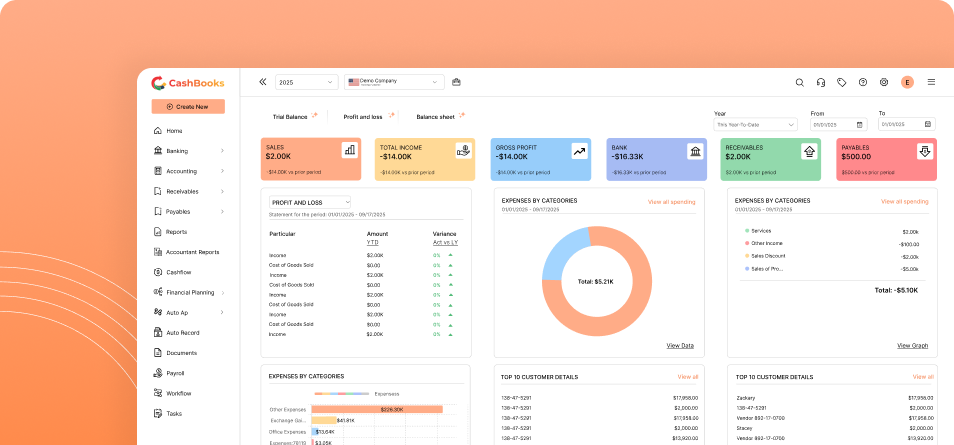
Effective accounting automation is not about handing every task over to software. It is about reducing repetitive work while keeping people involved where review and judgment matter. CashBooks follows this approach by connecting bank activity, transaction recording, categorization, review, reconciliation, and reporting in one accounting workflow.
Bring Bank Activity Into the Books
Bank Feeds bring transactions from connected accounts into CashBooks, reducing manual data entry. Auto Record helps record routine transactions so the books stay current as new activity comes in.
Categorize Transactions With AI
Automated Transaction Categorization uses business activity, past accounting decisions, and the chart of accounts to suggest the right account for each transaction. Users can review the suggestions and make changes when an entry does not fit.
Review What Needs Attention
Automation still needs oversight. The Review Engine checks transactions for unusual activity, possible duplicates, and missing entries. This gives users a clear place to review items that may need a closer look instead of checking every transaction from scratch.
Simplify Reconciliation
CashBooks provides suggested reconciliation matches that help connect bank activity with transactions already recorded in the books. Users can review the suggested matches and confirm or change them before completing the reconciliation.
Prepare Records for Accountants
Accurate books also need to be easy for someone else to review. Accountant Reports help business owners share organized financial information with an outside bookkeeper or accounting firm.
CashBooks also supports QuickBooks Import, Shopify Integration, and other integrations and compliance tools to help businesses bring more of their financial activity into one system.
The practical value of AI comes from how these pieces work together. When routine work is automated, exceptions are flagged for review, and financial records remain connected to reporting, businesses can spend less time on manual bookkeeping without giving up control over their books.
Our Expert Insight
AI works best in accounting when it handles predictable work and brings exceptions to a person’s attention. Not every transaction needs the same level of review. A routine monthly software charge may follow a clear pattern, while a large payment to a new vendor may need a closer look.
We recommend paying extra attention to new vendors, large or unusual transactions, and entries that do not match past activity. Recurring rules should also be reviewed when the business changes. A rule that worked before may not fit a new vendor, expense, or account.
The goal is not to remove human review. It is to focus that review where it has the most value. That is where AI in accounting can make the biggest difference.
Key Takeaways
- AI in accounting helps automate repeat accounting tasks.
- AI can sort transactions, suggest matches, and flag unusual activity.
- Human review remains important for new, high-value, and unclear entries.
- AI accounting software can reduce manual data entry and speed up bookkeeping.
- Businesses should start with repeat tasks and expand AI use over time.
- Good data and clear review rules help AI systems work better.
- The best use of AI supports accounting judgment rather than removing it.
FAQs
1. Does AI in accounting improve accuracy?
It can reduce common manual errors, such as duplicate entries or incorrect transaction coding. Accuracy still depends on the quality of the data, accounting rules, and human review.
2. Can AI handle bookkeeping without an accountant?
AI can handle many routine bookkeeping tasks, but it does not replace professional judgment. Businesses may still need an accountant for complex transactions, financial review, tax matters, and reporting decisions.
3. How does AI learn how to categorize transactions?
AI can use past accounting choices, transaction details, business activity, and the chart of accounts to recognize patterns. Users should review new or unusual transactions before relying on those patterns.
4. What accounting tasks should not be fully automated?
Complex or unusual transactions should not be left to automation alone. Large payments, new vendors, unusual expenses, year-end adjustments, and unclear entries deserve human review.
5. What should a business check before choosing AI accounting software?
Look at how the software handles data security, bank connections, transaction review, user permissions, integrations, reporting, and corrections. It should also give users control over AI-generated entries.